|
DEC Announces April 1 Start of Spring Trout Fishing
Season
Published: March 23, 2025 at
11:45 a.m.
By: Press Release from NYS DEC
DEC Announces April 1 Start of Spring Trout Fishing
Season
Abundant Angling Opportunities for New Yorkers to
‘Get Offline, Get Outside’
New York State
Department of Environmental Conservation (DEC) Acting Commissioner Amanda
Lefton has announced the April 1 start of the spring trout fishing season,
which provides excellent angling opportunities thanks to DEC's annual
stocking program and wild trout fisheries. DEC's extensive spring stocking
includes nearly 1.9 million trout in waters statewide, enhancing the
diversity of fishing opportunities available to anglers across New York
State.
“While anglers
willing to brave the cold can enjoy catch-and-release fishing for inland
trout all year, the April 1 opener of the harvest season is still a
much-anticipated date in New York,” said Acting Commissioner
Lefton. “This is the true beginning of a long-awaited spring and a
perfect time to get outside and enjoy time along a waterway near you.”
Spring Trout
Stocking
DEC trout stocking is in full swing with 1,873,980 catchable-size brook,
brown, and rainbow trout stocked in ponds and streams across the state from
mid-March through early June. 'Stocked-Extended' streams, specified in
the Inland Trout Streams
Regulations section of the Freshwater Fishing
Regulations Guide, will receive fish every other week for two months
to provide season-long opportunities for angler success. Most stream
stockings will include larger stocked trout (12 inches or greater) as 10
percent of the total number. Spring trout stocking lists, including the
scheduled week of stocking for trout streams, can be found at DEC's website.
Hatcheries met
the production target for rainbow and brown trout, but drought conditions
in 2024 caused water supply constraints at some hatcheries, inhibiting
brown trout growth. Therefore, many stocked brown trout will be less than
the desired nine inches in length at the time of stocking.
Brook trout
production was affected by an outbreak of whirling disease at the Randolph
hatchery and related DEC actions at the Bath hatchery earlier this
month. Many streams will receive fewer brook trout this season. To
offset this loss, some ponds will receive surplus brown trout and rainbow
trout. Brook trout reared for Adirondack ponds were not exposed to whirling
disease so these fingerlings will be stocked as planned.
March 2025
Whirling Disease Response
Whirling disease is a parasite that affects trout and salmon, causing the
fish to swim in circles, develop blackened tails, or have spinal
deformities. It was likely introduced from wild fish in a pond that feeds
Randolph hatchery. Whirling disease is not harmful to humans or other
mammals but there is no known cure for whirling disease in fish.
Brook trout at
Randolph hatchery were euthanized to control the disease. Brook trout at
Bath hatchery that were transferred from Randolph earlier this year were
also euthanized to further prevent the spread. Whirling disease is
controlled through depopulation, so the impacts should be limited to this
season. DEC controlled this disease at Randolph Hatchery through
depopulation when it was detected at the facility about 30 years ago.
DEC Fisheries
staff are developing strategies to mitigate potential outbreaks of the
disease at hatcheries in the future. Anglers and boaters can do their part
on waterways by following recommended guidelines, such as properly
cleaning, draining, and drying their boats and gear to lessen the
likelihood of spreading whirling disease and other invasive plants,
animals, and diseases. Learn more about how to protect waters from
invasive species on DEC’s webpage.
Trout Fishing
Resources
The popular Trout Stream Fishing Map on DECinfo
Locator allows anglers to view trout stream reaches, color-coded by
management category, as well as fishing access associated with those
reaches. Links to the Trout Stream Fishing Map and
a User Guide are available on DEC's website.
Anglers can also
use smart phones to find trout fishing opportunities around the state by
accessing the Tackle Box feature in DEC’s HuntFishNY
app. The Tackle Box provides one-stop-shopping for information on access
sites, stocking, regulations and more. Information on how to
download the app can be found on DEC’s website. Anglers are
encouraged to check out these valuable resources when planning their next
fishing trip.
2025 Freshwater
Fishing Regulations Guide
A digital version of the new
guide is available to download on DEC’s website. Hard copies of
the guide are available wherever sporting licenses are sold. For locations visit DEC’s
website.
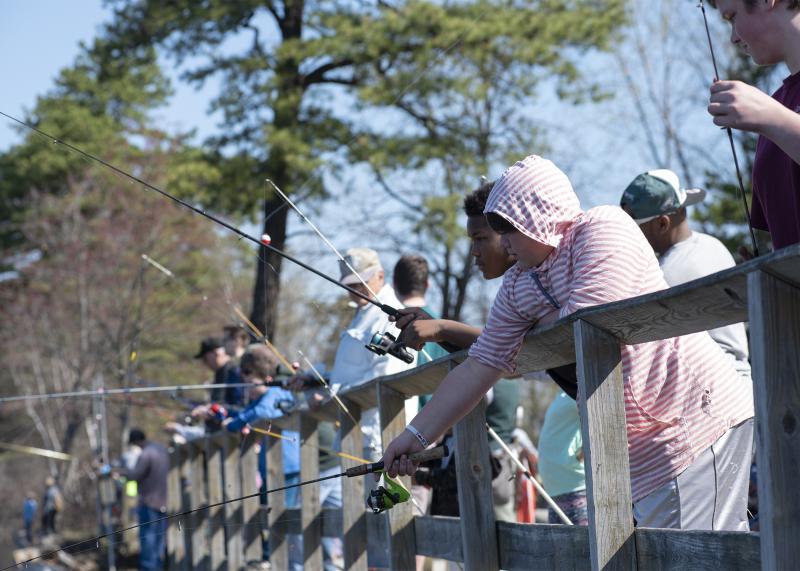
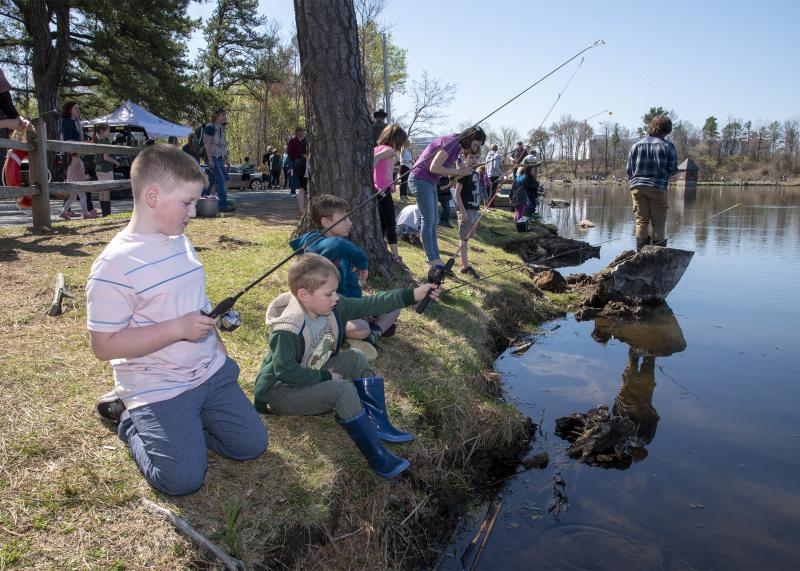
To help make
fishing more affordable and help inspire the next generation of anglers,
DEC partners with many libraries across the state to provide a free fishing
rod lending program. In addition to borrowing a book, library patrons can
sign out a fishing rod. This affordable opportunity for people to try
fishing before purchasing their own gear supports Governor Hochul’s “Get Offline, Get Outside”
initiative, to promote physical and mental health by helping New York’s kids
and families to put down their phones and computers, take a break from
social media, and enjoy recreation and outdoor social gatherings. For more
information and a list of participating libraries, visit the DEC’s website.
DEC offers a host
of resources for those interested in getting started in
fishing. The I FISH NY Beginners' Guide
to Freshwater Fishing provides information on everything from
rigging up a fishing rod, to identifying catch, and understanding fishing
regulations. There’s also a video series on the DEC’s
YouTube channel that complements the Beginners’ Guide. Information
about ‘learn to fish’ clinics and other mentoring opportunities are also
available on DEC’s website.
Safe Fish
Consumption
The New York State Department of Health (DOH) offers health advice on
eating fish caught across New York’s waterways. More information on New York State Fish
Consumption Advisories and advice by specific waterbody
location can be found on DOH’s website.
|