|
Lewis County DSS Commissioner Discusses NYS Emergency
Rental Assistance Program that Opens for Applications on June 1st
Published: May 28, 2021 at 03:45 p.m.
By: Nick Altmire
Lowville, NY- Earlier this
week Governor Cuomo announced details for the upcoming New York State
Emergency Rental Assistance Program. Approximately $2.8 billion in federal
funding has been given to New York State to assist households that have
fallen behind on their rent and have experienced financial hardship due to
COVID-19 pandemic and are at risk of homelessness or housing instability.
In addition, the program can provide temporary rental assistance and
assistance with unpaid utility bills. This assistance can pay up to 12
months of past due rent and for some households, pay up to 3 months for
future rent. The program can also pay for up to 12 months of overdue electric
or gas bills. Payments will be issued directly to the landlord or utility
provider.
The program will begin accepting applications on June 1st at 9 a.m., via an
online portal. The online portal will be the only way to apply for
the program, which is on a first come, first served basis. Those needing
assistance are encouraged to apply as soon as possible once the portal
opens, as once the allotment of funding has been reached the program will
close. Landlords and tenants must both apply jointly for the program.
We sat down this
morning with Jenny Jones, Commissioner of the Lewis County Department of
Social Services, to discuss the Emergency Rental Assistance Program and the
importance for eligible Lewis County residents to apply as soon as
possible. You can see our full interview below, followed by additional
information about the program.

In Lewis County,
there are 3 agencies that will be providing assistance to
anyone needing help with the application or for those without an internet
connection. They are:
Lewis County
Opportunities, Inc.
(315) 376-8202
Snow Belt Housing
Company, Inc.
(315) 376-2639, EXT 5
Lewis County
Department of Social Services
(315) 376-5400
New York State
will also have a call center to take questions at 1-844-NY1-RENT.
To qualify for
the program, eligible residents must meet the following criteria:
·
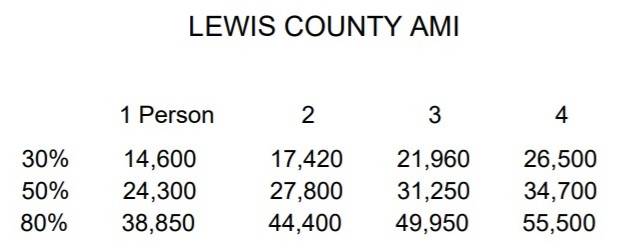
Household gross income at or below 80 percent of area
median income, which varies by county and household size.
·
A member of the household received unemployment
benefits or experienced a reduction in income, incurred significant costs
or experienced financial hardship, directly or indirectly, due to the
COVID-19 pandemic.
·
The applicant owes past due rent at their current
residence.
Renters will need
to provide:
- Personal identification for all household members. Acceptable
forms of identification include: A photo ID, driver license or
non-driver government-issued ID, passport, EBT/Benefits Issuance Card,
birth or baptismal certificate, school registration.
- Social Security number of any household members who have been
issued one. Individuals do not need to have a lawful immigration
status to qualify for the program.
- Proof of rental amount,
signed lease, even if expired. If no lease is available then proof can
be shown through a rent receipt, canceled check or money order. If no
documentation is available, landlord attestation will be accepted.
- Proof of residency and occupancy – Signed lease, rent receipt, utility
bill, school records, bank statement, postal mail with name of
applicant, insurance bill, or driver license. Proof should be current.
- Proof of Income to document income
eligibility:
- Documents demonstrating monthly income for the prior month, such as pay
stubs, bank account deposit verification, unemployment benefits
letter, or other proof;
OR
- Documents demonstrating annual income for
2020, such as a W-2 tax
form from an employer, an annual statement of earnings, or a copy of
a completed income tax return, such as a 1040, 1040EZ, 1099 tax form,
or other evidence of 2020 annual income.
- Self-attestation of income is permitted in
certain circumstances where no documentation is available such as
certain self-employment.
- Copy of gas or electric utility bill, if applying for help paying for utility
arrears at the same rental unit.
Applicants will
be asked to attest that on or after March 13, 2020, a member of the
household received unemployment benefits or experienced a
reduction in household income, incurred significant costs or experienced
other financial hardship, directly or indirectly, due to the COVID-19
pandemic. The applicant will need to sign the application form and
associated certifications agreeing that the information provided in the
application is accurate.
You can download and/or print the renter’s checklist here.
Landlords and
property owners will need to provide:
- Completed W-9 tax form.
- Executed lease with tenant applicant, or if there is
no written lease, a cancelled check, evidence of funds transfer or
other documentation of the last full monthly rent payment.
- Documentation of rent due from tenant (e.g.
ledger, etc.) or attestation on application.
- Banking information to receive direct deposit payment.
The property
owner or an authorized property management company will be required to sign
the application form and associated certifications agreeing that the
information provided, including the amount of rental arrears owed, is
accurate and does not duplicate a payment received from another program.
The property
owner or authorized property management company must also agree to the
following terms as a condition of accepting rental arrears payments:
- The ERAP payment satisfies the tenant’s full
rental obligations for the time period
covered by the payment.
- Waive any late fees due on any rental arrears
covered by the ERAP payment.
- Not increase the monthly rental amount above
the monthly amount due at the time of application for ERAP assistance
for months for which rental assistance is received and for one year
from receipt of the ERAP payment.
- Not evict the household on behalf of whom the
ERAP payment is made for reason of expired lease or holdover tenancy
for one year from the receipt of the ERAP payment. An exception to
this requirement shall be made if the dwelling unit contains four or
fewer units and the property owner or owner’s immediate family members
intend to immediately occupy the unit for use as a primary residence.
You can download and/or print the landlord’s checklist here.
For the first 30
days of the program, priority will be given to households in the following
order:
•
Households with income at or below 50 percent AMI and that also
include a household
member who:
o Is currently unemployed for at least
90 days; or
o Is a veteran; or
o Is currently experiencing domestic
violence or is a survivor of human trafficking; or
o Has an eviction case related to their
current residence pending in court: or
o Resides in a mobile
home; or
o Lives in a community
that was disproportionately impacted by COVID-19; or
o Lives in a dwelling of
20 or fewer units.
•
Households with income at or below 50 percent AMI.
•
Households with income at or below 80 percent AMI and that also
include a household
member who:
o Is currently unemployed for at least
90 days; or
o Is a veteran; or
o Is currently experiencing domestic
violence or is a survivor of human trafficking; or
o Has an eviction case related to their
current residence pending in court: or
o Resides in a mobile
home; or
o Lives in a community
that was disproportionately impacted by COVID-19; or
o Lives in a dwelling of
20 or fewer units.
•
Households with income at or below 80 percent AMI.
After the first
30 days, applications for all eligible households will be processed on a
first come, first served basis, as long as funds
remain available.
|